Have you ever noticed crusty white spots on your clean dishes? Does your skin feel dry and itchy right after a shower? Maybe you feel like you are constantly scrubbing soap scum off your bathtub walls.
If these problems sound familiar, you are likely dealing with hard water. It is a very common issue across the United States. While hard water isn’t usually dangerous to your health, it is a major nuisance for your home and your body.
Fortunately, there is a reliable solution. It’s called a water softener system.
This device can transform your daily routine. It protects your plumbing and makes cleaning easier. In this guide, we will walk through everything you need to know about these systems. We will cover how they work, the different types available, and how to pick the right one for your house.
What Exactly Is “Hard Water”?
Before we dive into solutions, let’s define the problem. Water is considered “hard” when it contains high levels of dissolved minerals. The main culprits are calcium and magnesium.
Before water reaches your tap, it travels through the ground. Along the way, it picks up these minerals from rocks and soil. Depending on where you live, your groundwater might be packed with them.
When this mineral-heavy water enters your home, it causes problems. The minerals don’t just stay in the water. They stick to surfaces. They clog up your pipes and coat the heating elements in your appliances. This buildup is often called “scale.” A quality water softener system is designed to remove these minerals before they cause damage.
Signs You Need a Water Softener System for Home
How do you know if hard water is truly your problem? Besides getting a professional water test, there are several telltale signs around your house.
If you notice these symptoms, a home water softener system might be the answer:
- Scale Buildup: Look for crusty white or greenish deposits on faucets and showerheads.
- Dry Skin and Hair: Hard water makes it difficult to rinse soap away completely. This leaves a residue on your skin that causes dryness and irritation.
- Dingy Laundry: Clothes washed in hard water often look dull and feel scratchy. They also wear out faster.
- Soap Won’t Lather: You find yourself using lots of shampoo or dish soap just to get a decent foam. Hard water fights against soap.
- Appliance Issues: Your dishwasher or water heater might fail sooner than expected due to scale buildup inside the machine.
How Does a Water Softener System Work?
It might seem like magic, but softening water is actually simple science. Most standard water softener systems use a process called “ion exchange.”
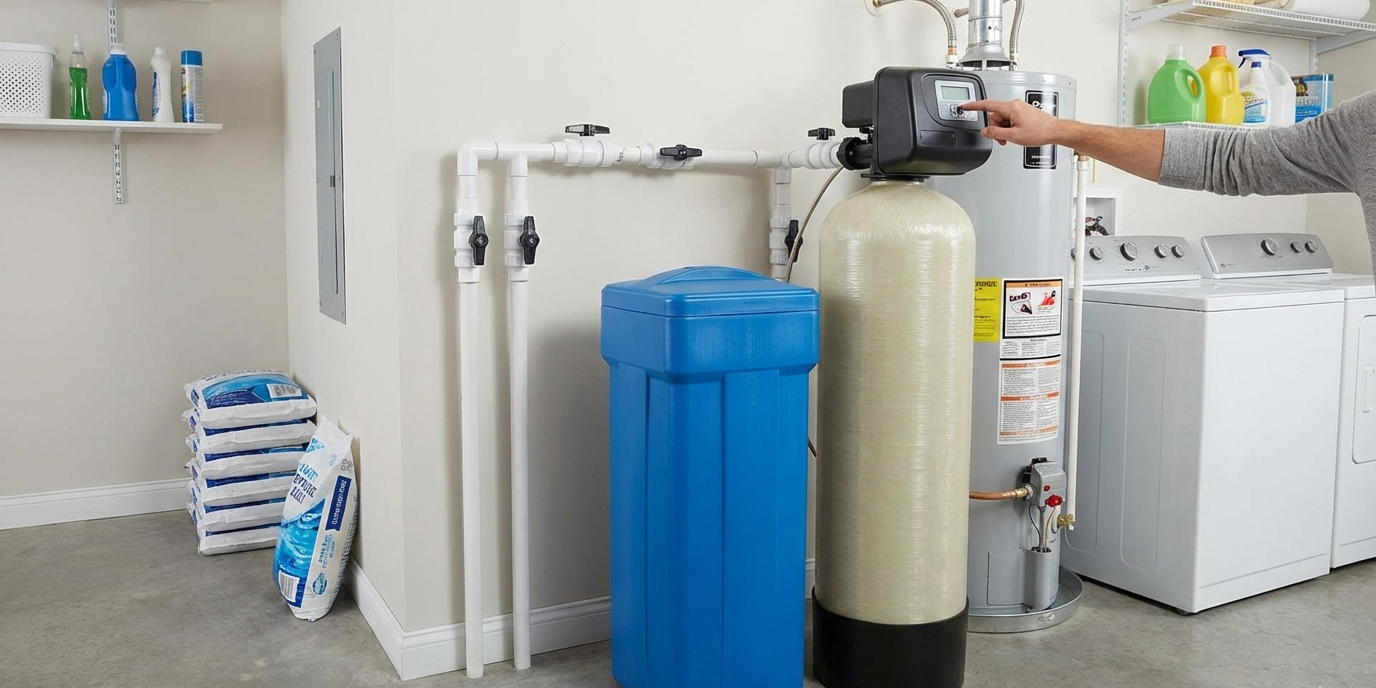
Think of magnets. We know that opposite poles attract. A water softener uses this principle. Inside the main tank of the softener, there are thousands of tiny resin beads. These beads are normally covered with sodium (salt) ions.
As hard water flows into the tank, the calcium and magnesium minerals are attracted to the resin beads. They stick to the beads, knocking the sodium ions off. The minerals get trapped in the tank, and the sodium goes out with the water.
The result? Soft water flows through your pipes. Eventually, those beads get full of minerals. The system then runs a “regeneration” cycle. It flushes the beads with a strong saltwater brine from a separate tank to clean them off, making them ready to work again.
Benefits of Installing a Whole Home Water Softener System
Investing in a whole home water softener system isn’t just about getting rid of spots on glasses. It offers several long-term benefits for your household and your wallet.
First, your plumbing will thank you. Soft water prevents scale from building up inside your pipes. Over many years, this scale can reduce water flow and even lead to costly pipe replacements.
Second, your appliances will last longer. Your water heater, dishwasher, and washing machine work much harder when using hard water. Scale buildup makes them less efficient, driving up energy bills. A water softener system for the whole house protects these expensive investments.
Finally, you will save money on cleaning products. Because soft water works better with soap, you will use significantly less shampoo, laundry detergent, and dish soap. Those savings add up over time.
Exploring Different Types of Water Softener Systems
When you start shopping, you will realize there isn’t just one type of house water softener system. Choosing the right type depends on your needs and budget.
Salt-Based Ion Exchange Softeners
This is the most common and widely recognized type. As described earlier, it uses salt to remove minerals. They are highly effective for very hard water. They do require regular refilling of the brine tank with bags of salt.
Dual-Tank Softeners
These are heavy-duty salt-based systems. When one tank is regenerating (cleaning itself), the other tank takes over. This ensures you have soft water 24/7, even during the cleaning cycle. These are great for large families that use a lot of water at odd hours.
Magnetic or Electronic Descalers
These are salt-free devices that wrap around your incoming pipe. They don’t actually remove minerals. Instead, they use electric or magnetic fields to change the structure of the minerals so they don’t stick to pipes as easily. They are cheaper and maintenance-free, but generally less effective than true softeners.
The Truth About Salt-Free Water Softener Systems
You will often see products advertised as a “salt free water softener system.” It is important to understand what these actually do.
Technically speaking, these are water conditioners, not softeners. A true softener physically removes calcium and magnesium. A salt-free system does not remove them. It “conditions” the hard minerals to stop them from building up as scale.
If your main goal is to prevent scale in pipes without using salt bags, a salt free water softener system might work for you. However, if you want the slick feeling in the shower and brighter laundry, a traditional salt-based water softener system is far more effective.
I always tell homeowners to be realistic about their expectations with salt-free units. They help with plumbing, but they won’t change how the water feels on your skin.
Choosing the Best Water Softener System for Your Needs
Finding the best water softener system for your home requires looking at two main factors: how hard your water is, and how much water your family uses.
First, get your water tested. You need to know the “grains per gallon” (GPG) of hardness. Anything over 7 GPG is considered hard.
Next, calculate your usage. The average person uses about 75-100 gallons of water per day. Multiply that by the number of people in your house.
You need a system with the right capacity. Capacity is measured in grains. A small home might need a 24,000-grain unit, while a large family might need a 48,000-grain unit or bigger. If you buy a unit that is too small, it will have to regenerate too often, wasting water and salt. If you buy one that is too big, you are spending unnecessary money.
Understanding Water Softener System Cost
The price of a water softener system can vary quite a bit. The final cost depends on the brand, the capacity, features, and installation fees.
Generally, you can expect the unit itself to cost anywhere from $500 for a basic big-box store model to over $2,500 for a high-end system with smart features.
Don’t forget about operating costs. A salt-based water softener system for home use will require salt refills. Depending on your water usage, you might spend $10 to $20 per month on salt bags. You also need to factor in the water used during the regeneration cycle, which can slightly increase your water bill.
While the upfront water softener system cost might seem high, remember the savings on soap, energy, and appliance replacements over time.
Water Softener System Installation: DIY vs. Pro
Once you have picked out your water softener system whole house unit, it needs to be installed. This is where you have to decide between doing it yourself or hiring a professional.
Water softener system installation involves cutting into your home’s main water supply line. It also requires connecting a drain line for the regeneration cycle.
If you are very comfortable with plumbing, soldering copper pipes, or working with PEX tubing, a DIY installation is possible. It can save you money on labor costs.
However, if the idea of cutting pipes makes you nervous, hire a professional plumber. A poor installation can lead to leaks and water damage. A pro will ensure it is set up correctly and complies with local plumbing codes. They can usually finish the job in a few hours.
Maintenance Tips for Your New System
A quality water softener system is designed to last for many years, usually 10 to 15. But like any appliance, it needs a little attention to keep running smoothly.
The most important task is checking the brine tank. Don’t let the salt level get too low. You should usually keep the tank at least one-third full.
Occasionally, a hard crust or “salt bridge” can form in the tank. This prevents the salt from dissolving in the water. If you see a bridge, carefully break it up with a broom handle.
Some experts recommend using a resin cleaner once or twice a year. You pour this liquid into the brine tank. It helps clean off iron and other heavy metals that can clog the resin beads over time.
Popular Brands: Culligan and Others
When shopping, you will encounter many brands. Some names have been around for decades.
For example, a Culligan water softener system is a very well-known option. Culligan operates through local dealers who handle testing, sales, installation, and maintenance. This dealer network provides great service, though it is often more expensive than buying a DIY unit.
Other reputable brands available at home improvement stores or online include Fleck, Whirlpool, and GE. These are often good choices for homeowners looking to handle the purchase and potential installation themselves to save money.
Comparing features, warranties, and customer reviews is key regardless of the brand name on the box.
Frequently Asked Questions
How do I really know if I need a water softener system?
While signs like soap scum and dry skin are strong indicators, the only sure way is a water test. You can buy a cheap test strip kit online or at a hardware store. For more accurate results, you can send a sample to a lab. If your hardness level is above 7 grains per gallon, a softener is highly recommended.
Is the water from a softener safe to drink?
Yes, softened water is generally safe to drink for most people. The process adds a small amount of sodium to the water. For the average person, this amount is insignificant compared to the salt in food. However, if you are on a very strict low-sodium diet for health reasons, you might want to install a separate drinking water faucet that bypasses the softener, or use potassium chloride pellets instead of salt.
How much salt will a water softener system use?
This depends heavily on how hard your water is and how much water your family uses. An average family of four with moderately hard water might use roughly one 40-pound bag of salt per month. If your water is extremely hard, you will use more.
Will softened water harm my lawn or plants?
It is best not to use softened water for irrigation. The extra sodium in the water can build up in the soil over time and harm certain types of plants and grass. Most installations are set up so that outside hose bibs bypass the water softener system.
How long does a water softener system last?
A well-maintained single-tank electric water softener typically lasts between 10 and 15 years. The quality of the components and the hardness of the water it is treating play a big role in its lifespan.
Is a salt-free system better than a salt-based one?
It depends on your goals. If you absolutely must avoid salt or don’t want the maintenance of buying bags, a salt-free conditioner is better than nothing. It will help reduce scale in pipes. But if you want the full benefits of soft water—like slick skin, better lathering soap, and brighter laundry—a traditional salt-based water softener system is far superior.
Conclusion
Living with hard water is a daily struggle that you don’t have to accept. It damages your home’s plumbing, shortens the life of your appliances, and irritates your skin.
Installing a water softener system is a smart investment in your home’s infrastructure and your family’s comfort. Whether you choose a traditional salt-based unit for maximum effectiveness or a salt-free conditioner for reduced maintenance, addressing hard water is a good decision.